Why Play Matters
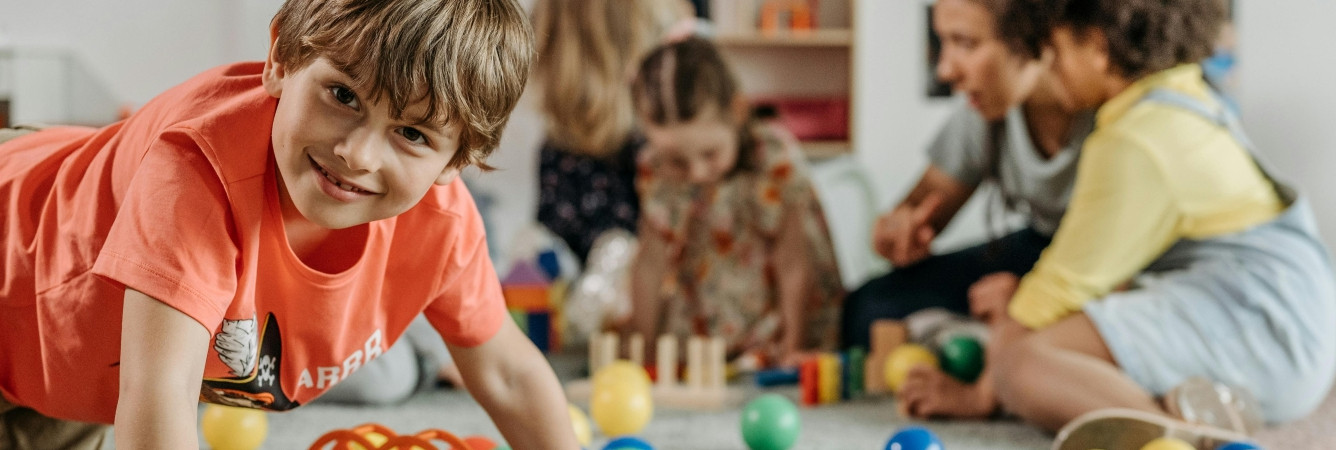
Play is natural, enjoyable, and essential for children’s development.
It helps children learn skills, discover themselves, and build independence.
Benefits of Play (Grouped as PILES)
- Physical: Gross and fine motor skills, coordination, strength, spatial awareness.
- Intellectual: Thinking, reasoning, problem-solving, memory, imagination, early literacy and numeracy.
- Language: Vocabulary, communication, listening, reading, writing.
- Emotional: Expressing feelings, coping, confidence, self-esteem.
- Social: Relationships, sharing, turn-taking, respect, cooperation.
Stages of Social Play
Solitary → Parallel → Looking-on → Cooperative → Imitative → Play with rules → Being part of a crowd.
Types of Play and Their Benefits
- Stories, Songs & Music: Physical movement, language development, emotional regulation, social bonding.
- Quiet Spaces: Relaxation, reflection, language of feelings, managing stress.
- Pretend Play: Creativity, imagination, role-playing, emotional expression, social interaction.
- Nature Play: Outdoor exploration, physical activity, problem-solving, emotional well-being.
- Messy Play: Sensory experiences, creativity, fine motor skills, emotional outlet.
- Crafty Play: Art activities for creativity, fine motor skills, emotional expression.
- Big/Energetic Play: Physical health, coordination, problem-solving, teamwork.
- Tasty Play: Cooking and food play for sensory, intellectual, and social development.